Private label body oil and body glaze manufacturing
Moe’s Group LLC formulates, fills and labels private label body oils and body glazes at its FDA-registered facility in Chatsworth, California: custom private label from 1,000 units; white label from 200 units where a ready formula exists. We formulate body oils and body glazes to your brief, in your scent, and confirm the format and fill in your quote. Oils are named in the scope of our ISO 22716 cosmetics GMP certificate; it is on our About page with our ISO 9001 and ISO 45001 certificates.
Last updated October 2026
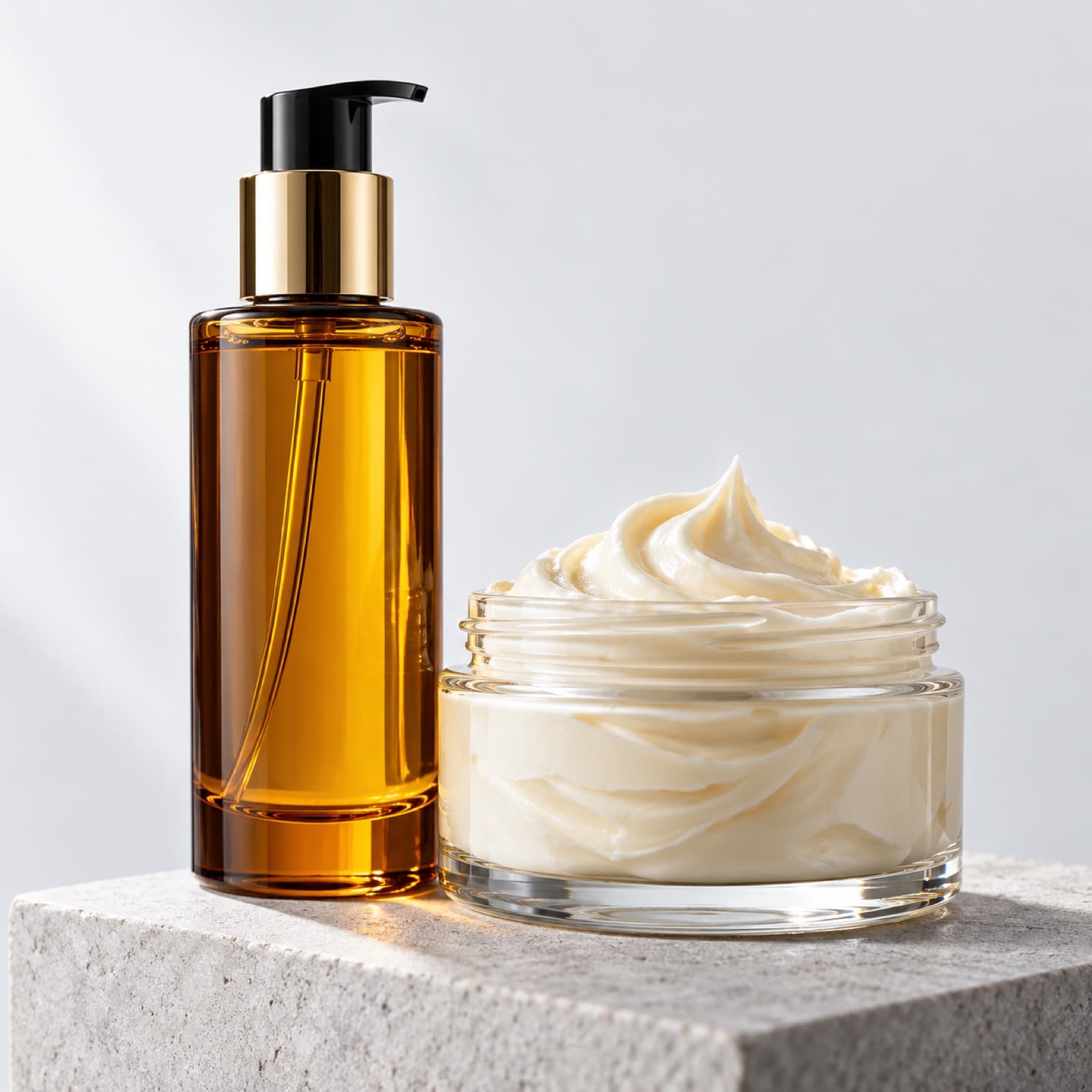
- Facility
- 9743 Independence Ave, Chatsworth, CA 91311 (Los Angeles)
- Common formats
- Dry body oil, shimmer body oil, body glaze (oil gel or soft balm), massage oil, oil mist
- Fills
- Chosen to suit the format and confirmed in your quote
- Service models
- Custom private label; white label where a ready formula exists
- Minimum order
- Custom private label from 1,000 units; white label from 200 units where a ready formula exists
- Formulation
- In house, by our own chemists
- Filling and labelling
- In house, in Chatsworth
- Capacity
- Over a million units a month across skin, hair and body care (capacity, not a delivery date)
- Quality
- FDA-registered facility; ISO 22716 cosmetics GMP (scope includes oils), ISO 9001, ISO 45001
- Contact
- +1 (866) 777-6751 or hello@moesgroup.com
What is a body glaze?
A body glaze is a marketing name, not a defined product type: brands use it for a body oil thickened into a gel, for a soft oil balm that melts on skin, and for shimmer gel oils. All three are thicker than a pourable oil, so a glaze can sit in a jar and hold shimmer without it settling. Say which one you mean in your brief, because each has a different formula and fill.
In the year to September 2026, typical US Google searches each month were about 49,500 for “body oil”, 12,100 for “shower oil”, 9,900 for “scented body oil”, 6,600 for “shimmer body oil” and 3,600 for “body glaze” (Keywords Everywhere). The best-selling listing in a TikTok Shop search for “body oil” we ran on October 28, 2026 was a scented body glaze showing more than 1.2 million units sold over its lifetime.
Which oils and ingredients go into a private label body oil?
A body oil is usually a blend of a few carrier oils or esters, picked for skin feel, absorption speed and shelf life. Common choices are jojoba, squalane, marula, sweet almond and rosehip oil, with light esters such as coco-caprylate for a dry finish, and vitamin E (tocopherol) to slow rancidity. Brands also ask for batana oil, covered on our batana oil page, and for tallow blended with oils for a richer glaze or balm, which builds on our tallow manufacturing.
Dry or wet finish is the main development decision. We source the oils your brief calls for, and our chemists match the blend to the feel and the fill.
How do shimmer oils and glazes stay compliant?
Every pigment that gives shimmer or color must be a color additive listed by the FDA for cosmetic use. Mica, titanium dioxide and iron oxides are listed for cosmetics generally, including the eye area, and are exempt from batch certification (21 CFR 73.2496, 73.2575 and 73.2250). Synthetic FD&C and D&C colors (21 CFR part 74) need FDA batch certification.
Each color additive goes on the ingredient list. Under 21 CFR 701.3 colors can be grouped at the end of the list. A shared “may contain” list is allowed for shaded makeup and nail products, so a shimmer oil sold as skin care usually lists each shade’s colors on its own label. In a thin oil, mica settles to the bottom, so you either print “shake well” on the label or thicken the oil into a glaze that holds the pigment in place.
How do you choose and label the scent?
Scent is often why a body oil sells. Fragrance oils come from specialist fragrance suppliers, and each should come with an IFRA certificate showing the maximum level for its product category. A leave-on body oil is usually IFRA category 5A. Name a scent by its notes, such as vanilla, amber or fig, not by another brand’s perfume.
On the ingredient list, the blend can still read simply as “fragrance” (21 CFR 701.3). That may change: MoCRA requires FDA to name fragrance allergens that must be listed, and the federal regulatory agenda published in July 2026 put FDA’s proposed rule at November 2026. California already requires manufacturers with one million dollars or more in annual cosmetics sales to report fragrance allergens at or above 0.001% in leave-on products, and 0.01% in rinse-off products, to its Safe Cosmetics Program; that is a reporting duty, not a label requirement. California’s Proposition 65 list includes some essential-oil components, such as beta-myrcene, methyleugenol and pulegone, and a product that exposes consumers to them may need a warning.
Does a body oil need child-resistant packaging?
It can. Under 16 CFR 1700.14(a)(32), a nonemulsion cosmetic oil that is 10% or more hydrocarbons by weight and thinner than 100 Saybolt universal seconds at 100 F must be in child-resistant packaging. Thin hydrocarbon oils can be inhaled into the lungs if a child swallows them. Hydrocarbons are ingredients made only of carbon and hydrogen, such as mineral oil, isododecane, hydrogenated polyisobutene and squalane, even plant-derived squalane.
Attached sprays and products that cannot flow freely are exempt. A plant-oil blend usually falls outside the rule, but a dry oil built on hydrocarbons may not. Settle this before you order closures, because it changes which ones you can use.
What goes wrong with body oils, and how is it prevented?
Most body oil problems come from rancid oil, leaking packaging and settling shimmer.
- Rancidity. Oils high in linoleic acid, such as rosehip and grapeseed, oxidize faster and start to smell stale. A formula can balance them with more stable oils and tocopherol.
- Leaks and attacked plastics. Oil creeps past loose threads, and some fragrance oils can soften or crack certain plastics. Ask for container-compatibility testing before full-scale manufacturing begins.
- Shimmer that settles or stains. Pigment sinks in a thin oil and can transfer to clothing. Pigment level, particle size or a gelled base controls it.
- Summer melt. A soft-balm glaze can melt in a hot delivery van. Name the climate the product ships to in your brief, so the melting point can be set for it.
What can a body oil or body glaze claim?
Claims about how skin looks and feels are cosmetic; claims that the product treats a condition or changes the body make it a drug under US law. FDA’s guidance gives a massage oil as its example: one that only lubricates skin and adds fragrance is a cosmetic, but one sold to relieve muscle pain is a drug. Whatever you claim, the FTC expects evidence that backs it (Health Products Compliance Guidance).
| Can say (with substantiation on the finished product) | Cannot say (drug claim or unsupported) |
|---|---|
| Moisturizes and softens dry skin | Any claim to treat a skin condition, such as eczema or psoriasis |
| Skin looks smoother, glowing or radiant | Removes, fades or prevents stretch marks, scars or cellulite |
| Adds a shimmer or sheen | Firms or tightens skin by changing its structure |
| Lubricates skin for massage; leaves skin scented | Relieves muscle pain, relaxes muscles or helps you sleep |
| Made with jojoba, squalane or marula (if in the formula) | Soothes inflammation; heals or repairs skin |
| Vegan (if every ingredient is verified) | Approved by the FDA; any clinical result the finished product was not tested for |
Which body oil and body glaze formats can a brand choose?
There are seven common formats, from a thin dry oil to a soft balm. The format is the first decision in a brief, because it sets the base oils, the thickener and the fill. Which format and fill suit your product is confirmed in your quote.
| Format | What it is | Usual fill | What to decide in the brief |
|---|---|---|---|
| Dry body oil | Light oils and esters that absorb fast | Mist or pump | How dry the finish feels |
| Body oil | Richer carrier-oil blend with a sheen | Pump, pour bottle or dropper | Scent and sheen |
| Shimmer oil | Body oil with mica-based pigment | Pump or dropper | Shade; shake-well label or not |
| Body glaze (oil gel) | Oil thickened into a clear or shimmer gel | Jar | Thickness and shimmer |
| Body glaze (soft balm) | Oil set with butters or waxes; melts on skin | Jar | Behavior in summer heat |
| Shower oil | Oil with an emulsifier; turns milky with water and rinses off | Pump or flip cap | Rinse feel |
| Massage oil | Slower-absorbing oil with longer glide | Pump or pour bottle | Scent and glide time |
How does a body oil project work at Moe’s Group?
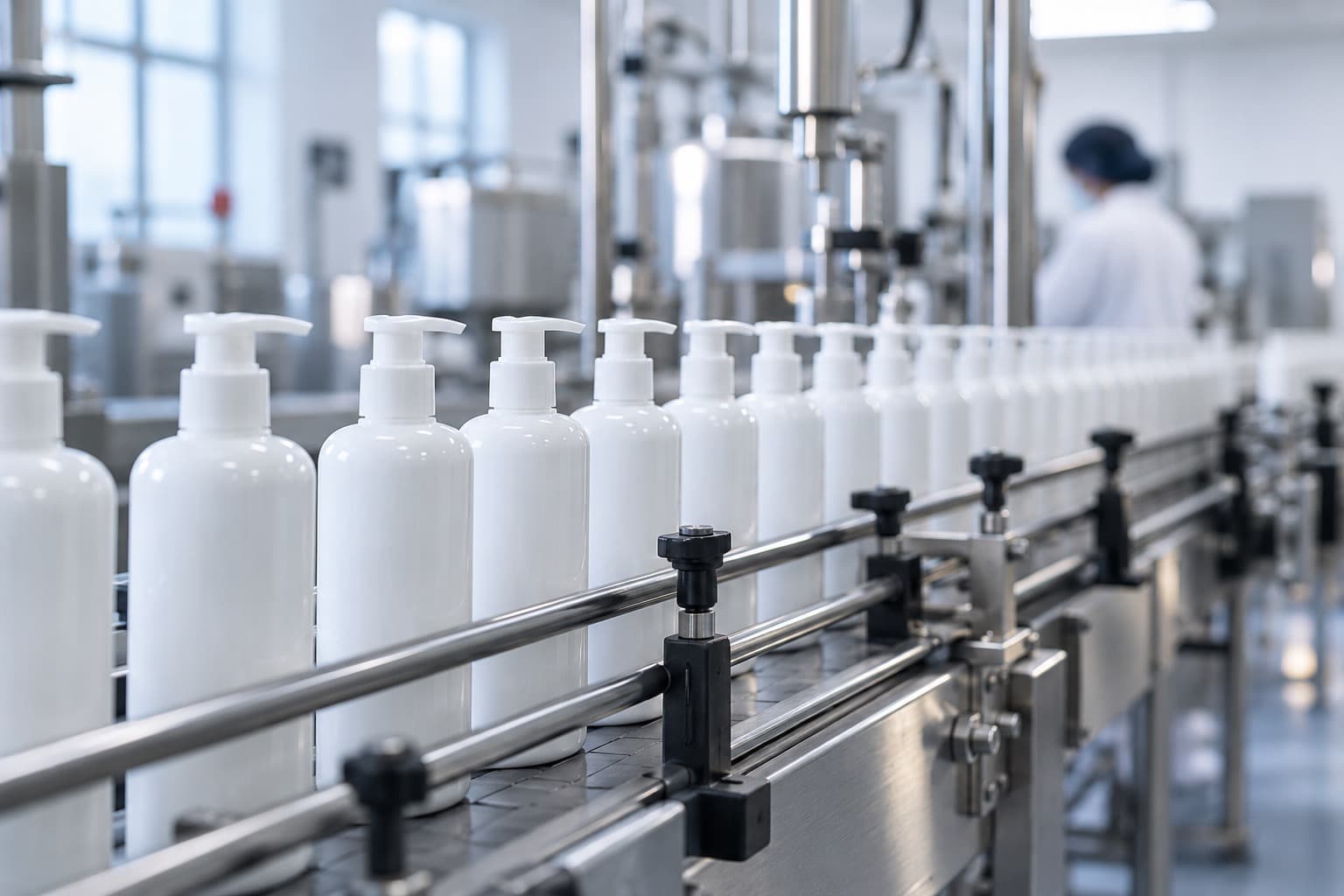
It runs in five steps, from brief to filled and labelled product, all at our facility in Chatsworth, California.
- Send your brief. Tell us the format, the finish, the scent direction, the packaging and the volume when you start your brand.
- Choose a ready formula or a custom one. Private label is formulated to your specification from 1,000 units, and white label starts from 200 units where a ready formula exists.
- Formulation. Our in-house chemists develop the blend to your specification, and you approve the feel, scent and shade before production.
- Packaging and label checks. Confirm that the formula suits your container, whether child-resistant packaging applies, and the claims and ingredient list for your artwork.
- Production. Filling and labelling run in house in Chatsworth.
Can Moe’s Group make my body oil, and what is the MOQ?
Yes: Moe’s Group makes private label body oils and body glazes in Chatsworth, California, with custom private label from 1,000 units and white label from 200 units where a ready formula exists. Private label gives you your own formula, scent and texture. Lead time depends on the formula and is set out in your quote, and the facility has capacity for over a million units a month across skin, hair and body care. For the rest of the range, see what we make.
Questions about body oils and glazes.
What is the difference between a body oil and a body glaze?+
A body oil pours. A body glaze is thicker, an oil gel or a soft oil balm, so it sits in a jar and holds shimmer.
Can I add shimmer to a body oil?+
Yes, with listed color additives such as mica, titanium dioxide and iron oxides. In a thin oil shimmer settles, so add a shake-well note or make a glaze.
Can I choose my own scent?+
Yes. Give us your scent direction; the fragrance level should stay within the IFRA limit for a leave-on body product, and the supplier’s IFRA certificate shows it. IFRA standards are voluntary in the US, but fragrance houses and retailers expect them.
What carrier oils can you use?+
Any your brief calls for, including jojoba, squalane, marula, sweet almond and rosehip, plus batana oil, or tallow blended with oils for a richer glaze or balm.
What is the difference between shower oil and body oil?+
Shower oil contains an emulsifier, so it turns milky when it meets water and rinses off in the shower. Body oil has no emulsifier and stays on the skin.
Does a body oil need child-resistant packaging?+
Only if it is a nonemulsion oil that is 10% or more hydrocarbons, such as mineral oil, very thin, and not in an attached spray. Most plant-oil blends are outside the rule.
Does a body oil have to be approved by the FDA?+
No. Cosmetics are not approved by the FDA before sale, apart from their color additives. The brand is responsible for safety and for keeping claims cosmetic.
What is the minimum order for private label body oil?+
At Moe’s Group the minimum order is custom private label from 1,000 units; white label from 200 units where a ready formula exists. Lead time depends on the formula and is set out in your quote.
Start a body oil or body glaze product
Tell us the format, the finish, the scent and the volume, and our chemists will come back with options and a quote. Prefer to talk it through first? Call +1 (866) 777-6751.
Sources
- U.S. Food and Drug Administration, “Is It a Cosmetic, a Drug, or Both? (Or Is It Soap?)”
- 21 CFR 73.2250 (iron oxides), 73.2496 (mica), 73.2575 (titanium dioxide) and part 74 (certified color additives)
- 21 CFR 701.3 (ingredient labeling)
- 16 CFR 1700.14(a)(32) (child-resistant packaging, hydrocarbons)
- Federal Trade Commission, “Health Products Compliance Guidance” (December 2022)
- Modernization of Cosmetics Regulation Act of 2022; Unified Agenda, July 2026
- California Health and Safety Code 111792.6
- IFRA Standards, 51st Amendment
- Keywords Everywhere (Google Keyword Planner data), pulled October 28, 2026
- TikTok Shop US search for “body oil”, October 28, 2026 (lifetime units shown on the listing)
- OEHHA, Proposition 65 list